Tamil and Western: Two Cultures, One Wedding in Tuscany
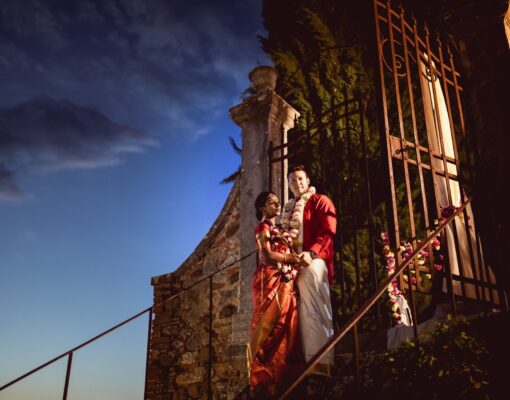
Katrina has roots in Sri Lanka, Ryan comes from Canada. Two days in a Tuscan castle, and neither one a guest in the other’s house.
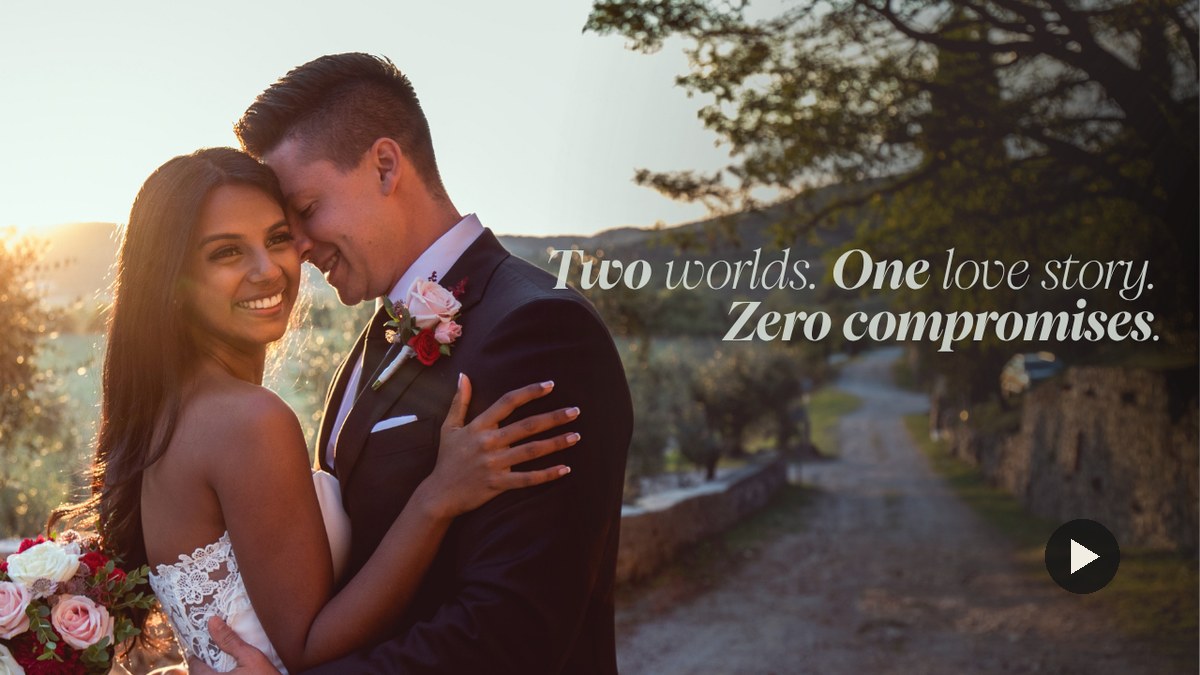
| The story · Two cultures, two days, one castle | Watch, 2:41 › |
Dreaming of your own wedding in Italy? Begin your love story ›
Picture having to choose which half of yourself to celebrate. The family you come from, with its rituals and its language, or the world you live in now. Katrina and Ryan did not choose. They celebrated both, over two different days, without taking anything away from either.
She has roots in Sri Lanka, he comes from Canada. Two cultures you can handle two ways at a wedding. You can pick one and shrink the other down to a quick nod, a charming little detail for the photographs. Or you can give each one its full space, its time, its respect. We chose the second way, in a Tuscan castle that carried the weight of both without making either one feel like a guest in the other’s house.
The Tamil day has its own timing, and its own truth. None of it can be rushed, and none of it can be faked. Get the order wrong, get one element out of place, and a family that flew across the world to see their tradition honoured feels it instantly.
The Western day, the one that followed, asks for something completely different and has to feel just as much like home. A different setting, a different rhythm, a different family arriving with its own idea of what a wedding is. Two ceremonies over two days means everything doubles: the logistics, the timings, the hundred small decisions that keep guests who have crossed half the world from ever feeling a tension, a delay, a detail out of place.
And that is exactly the point. When two worlds meet at a wedding, everything that could go wrong has to be handled beforehand, in the months leading up to it, so that across the two days nothing is left but the beauty. The families did not see the work. They saw only their traditions, both of them, treated with the same care.
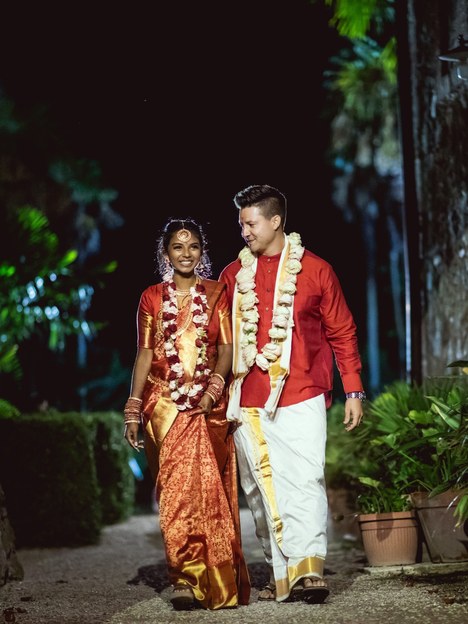
The Tamil day. Nothing here can be rushed, and nothing here can be faked.
Nadaswaram and thavil. The instruments that set the sound of the morning.
The oonjal. The swing, where the couple is rocked while the women sing to keep away anything that is not a blessing.
The agni. The sacred fire, and the seven steps around it that make the marriage real.
The thali. Three knots, and the whole room holds its breath.
Ask who has run your tradition before, and who they will be speaking to in your family to check it. One element out of place is felt instantly by the people who travelled for it.
In two weeks: the cocktail that tastes like where you are from.
Common questions
Can you have a Tamil or Hindu ceremony in Italy?
Yes. The ceremony is held in full, with the priest travelling in or sourced locally, and the rituals, the instruments and the timings built into the day as they should be. The legal paperwork is usually handled separately, at home, which leaves the ceremony free to be itself.
How do you plan a wedding for two cultures?
Give each tradition its own day rather than folding one into the other. Two ceremonies double the logistics and the timings, but neither side ends up as a decorative detail inside somebody else’s wedding.
How many days does a multicultural wedding in Italy take?
Two or three. One day per tradition, often with a welcome evening before and a farewell the morning after, since guests are travelling from several countries and nobody crosses the world for a single afternoon.
If your wedding has to hold two worlds together, book a free consultation with us: it’s a real conversation about your day, and by the end you’ll have the beginning of a plan and a first handful of venues picked for the two of you.
Begin your love story ›