An Indian Wedding in Italy: Two Days, and the Table Nobody Looked At
Halfway through dinner a tablecloth caught fire. By the time the guests turned back around, that table had become a ceremony.
| The story · Two days, and the thing nobody saw | Watch, 2:21 › |
Dreaming of your own wedding in Italy? Begin your love story ›
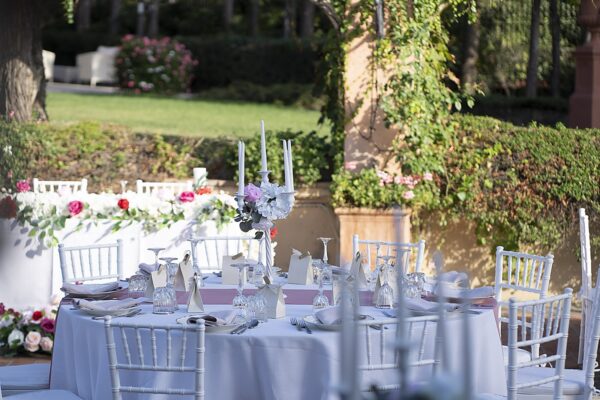
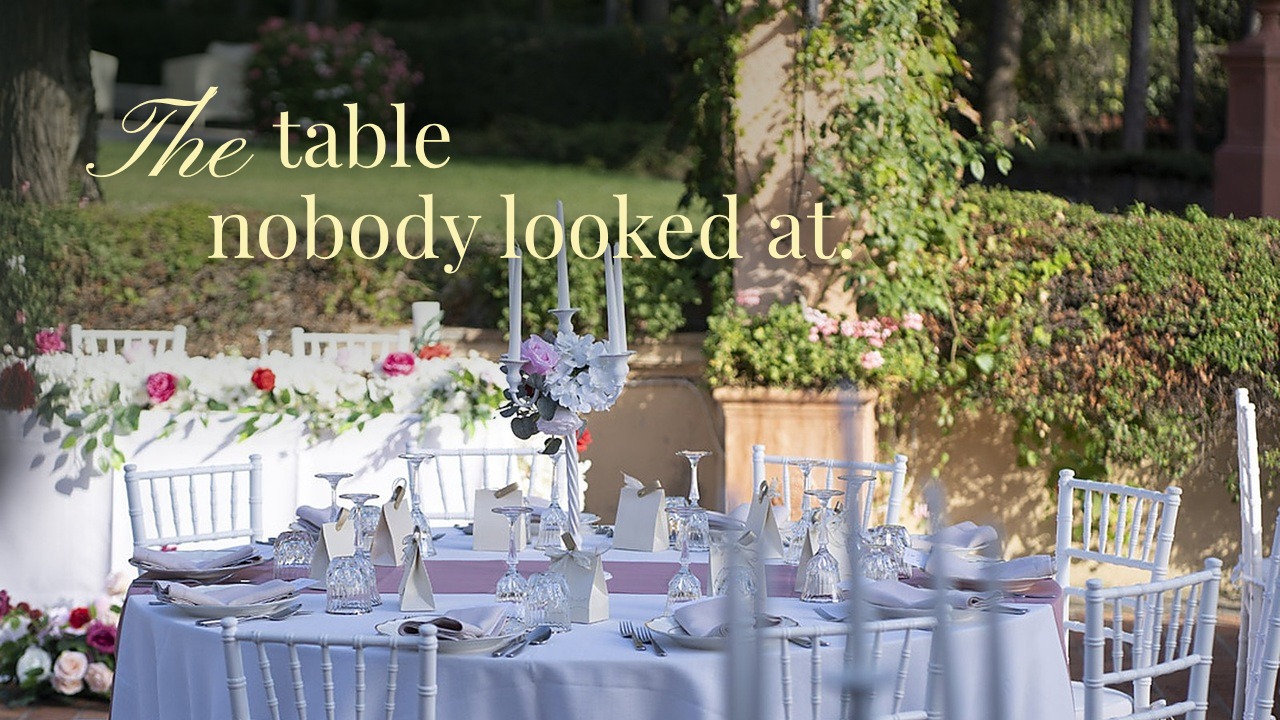
Halfway through dinner, a tablecloth caught fire. The candles had burned down faster than they should have, and the wax found the linen. Someone spotted it, got there and put it out within seconds. But a scorched table sitting in the middle of a wedding dinner is not something you can simply walk away from.
So we moved the room instead of the table. A dance had been called a few minutes earlier, which had everyone on their feet and facing the other way. And that same table was the one we then used for a family ritual, relaid from scratch, so that when the guests turned back around what they were looking at was a ceremony, not a repair. Almost nobody knew anything had happened.
That is not luck. That is what you get when there are enough hands on the floor, and when enough of the evening has already been worked out in advance.
Everything around it had been built with the same care. The pre-wedding ran the length of a whole day, opening with the turmeric ceremony and lunch, and closing that evening with a pizza party and an ice cream cart, which is the sort of combination that only works when a couple knows exactly who they are.
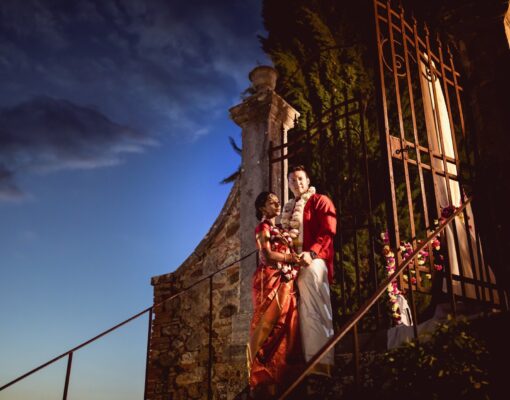
The Indian ceremony was complete, with all its religious rules observed to the letter, and separate coloured cushions and cloths for the two families, each side seated in its own colour. The food stayed Indian across both days, brought in by an Indian caterer, because for this couple the menu was not decoration. It was the point.
A wedding with that much you cannot get wrong leaves you less room to improvise than any other kind. Which is exactly why the invisible work matters most there. The families came for their traditions, kept properly, and that is what they got, from the first ceremony to the last plate.
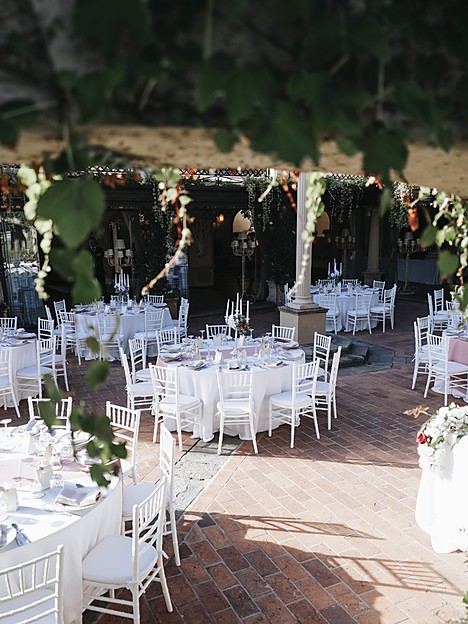
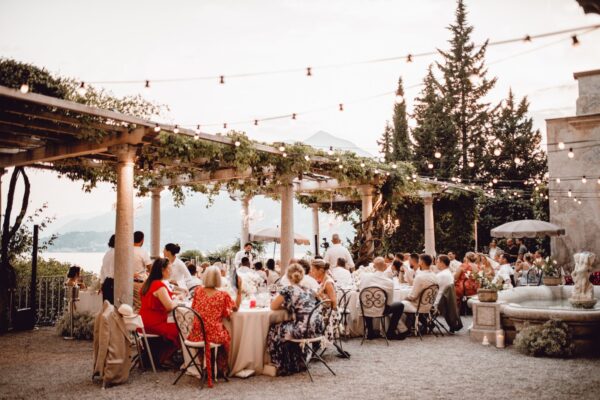
Two days, two families, and a running order worked out long before anyone sat down.
Someone is always on the floor. Something goes wrong at every wedding. What changes is how many people are in the room who can fix it without stopping the evening.
The running order is the safety net. When the next twenty minutes are already decided, a problem can be hidden inside a move that was going to happen anyway.
Traditions set the limits. A ceremony with rules that cannot be bent has to be planned down to the detail, because there is nothing left to improvise with.
Ask how many of their own people will be on the floor during dinner, not how many suppliers are booked. The answer tells you whether a problem becomes a story you laugh about later, or one your guests watch happening.
In two weeks: most weddings peak at the first dance. The best ones are only getting started.
Common questions
Can you have a full Indian wedding in Italy, with the religious rules observed?
Yes. The ceremony can be carried out in full, with its own priest and its own order, and everything practical arranged around it: the seating for the two families, the cloths and the cushions, the space and the time each rite needs. The venue has to agree to all of it in advance, which is a conversation to have before anything is booked.
How many days does an Indian wedding in Italy usually last?
Two is the common shape. A pre-wedding day that can run from a morning turmeric ceremony through to a party in the evening, then the wedding day itself. Guests have travelled a long way, and the extra day is what turns the trip into something more than a single afternoon.
Can an Indian caterer cook at an Italian venue?
Often yes, but it has to be agreed with the venue, which may have its own kitchen rules or a caterer it works with exclusively. Where it matters to a couple, we treat it as a condition when we draw up the shortlist, rather than something to negotiate once the place is booked.
If your wedding has rules that cannot be bent, start with a conversation. It’s free, it’s about your day, and by the end you’ll have a first plan and a shortlist of places that can hold all of it.
Begin your love story ›